
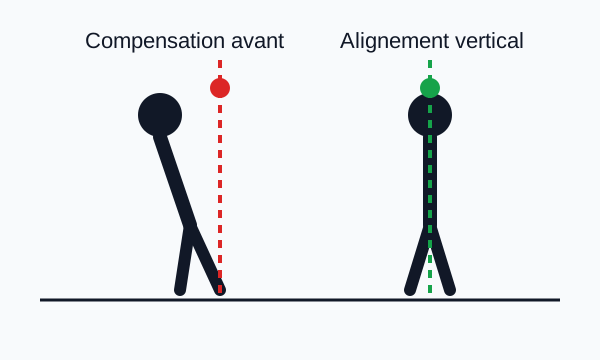
Idée centrale
La hauteur se voit. La stabilité, c’est ce que le corps ressent.
Les talons déplacent la charge vers l’avant. C’est inévitable. Ce qui change l’expérience, c’est la capacité de la chaussure à tenir le corps dans cette nouvelle position au lieu de laisser la cheville, le mollet, le bassin et le dos corriger en permanence.
Le corps ne réagit pas à la hauteur seule. Il réagit à un ensemble de signaux mécaniques : largeur d’appui, pente, maintien du pied et précision de l’axe du talon sous charge.
Facteur 01
Pente excessive
Une pente trop forte surcharge l’avant-pied et réduit la marge de correction du corps.
Facteur 02
Maintien insuffisant
Si le pied glisse dans la chaussure, la structure cesse de travailler et le corps compense à sa place.
Facteur 03
Base d’appui trop étroite
Quand le point de contact est trop fin, la cheville stabilise en continu ce que le talon aurait dû stabiliser.
Angle
Ce qui change d’abord quand le talon monte
Quand l’élévation augmente, l’avant-pied reçoit plus de pression. Ce déplacement est normal. Ce qui compte, c’est la façon dont la chaussure répartit cette pression.
Une construction stable permet de se tenir sur la chaussure. Une construction instable oblige à gérer la chaussure.
Compensation
Pourquoi l’inconfort remonte dans le corps
Quand la base est instable, la correction ne reste pas dans le pied. La cheville travaille, le mollet se tend, le bassin s’ajuste, et le bas du dos finit par participer.
C’est cette chaîne compensatoire qui rend certains talons fatigants bien avant qu’ils ne deviennent douloureux.
Contrôle
Pourquoi un talon stable change la journée
Un axe de talon contrôlé réduit le flottement latéral et rend le transfert de charge plus propre du talon vers l’avant-pied.
Le résultat n’est pas la souplesse. C’est moins de correction musculaire inutile dans la durée.
Ce que Kendrick optimise
La structure réduit l’effort correctif.
- Une géométrie de talon structurée pensée pour l’équilibre contrôlé, pas seulement pour la tension visuelle.
- Une logique d’appui plus verticale qui laisse la posture se poser au lieu de se corriger sans cesse.
- Une approche du fit centrée sur le maintien, la répartition des charges et la portabilité quotidienne.